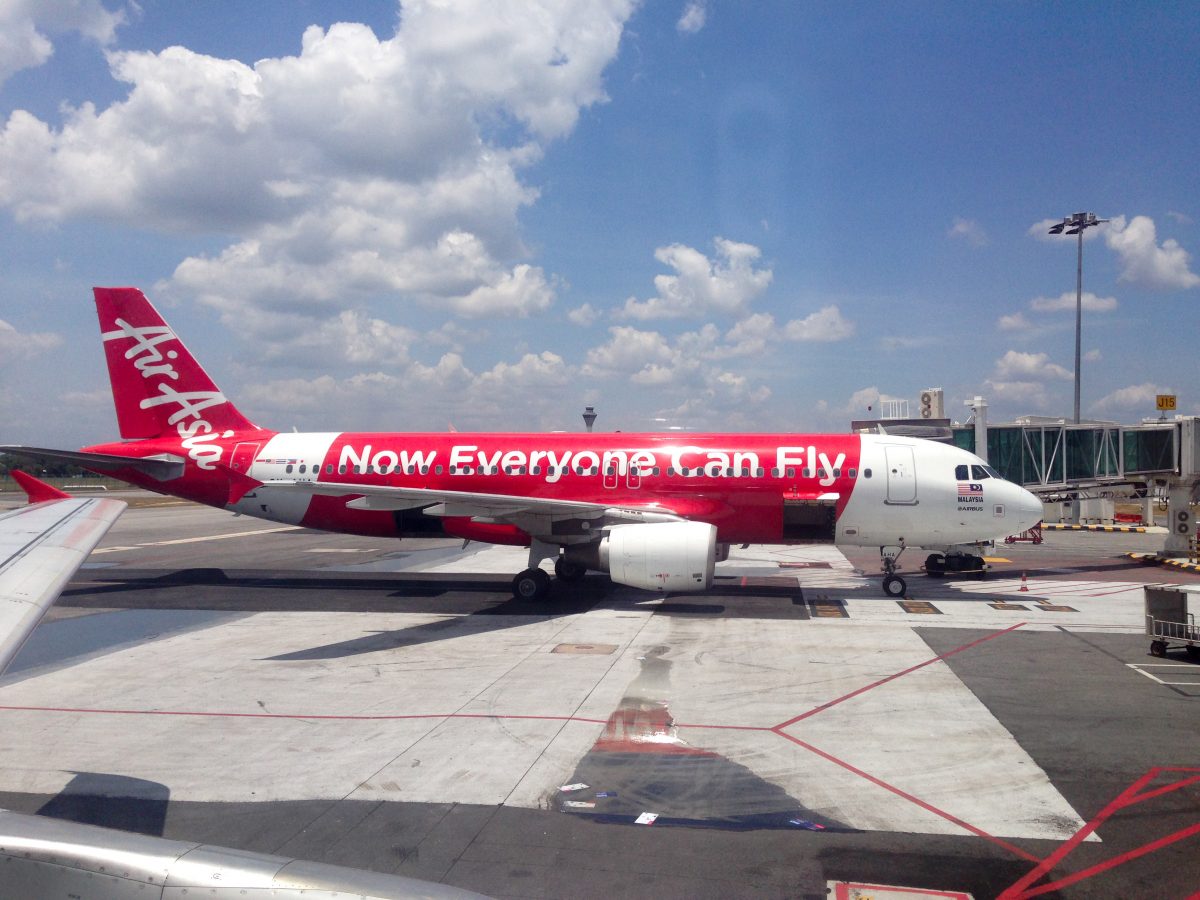
Answer: If you look for the information on AirAsia wheelchair charge on search engines, most probably you will end up on this page. However, there is no external link specified in the page.
On September 29th 2017, AirAsia has published an article about wheelchair charges on the Support section of its website. The answer can be a bit complex and different
Step 3: For the particular flight that requires a wheelchair service, choose its origin and destination and look at the charges on this page.
For example, you can find the wheelchair charge for flights between Kota Bharu (KBR) to Kuala Lumpur (KUL) will cost you RM 63.60 if you pre-book the service or RM 127.20 if you book it at the counter. So, be smart and book early to lighten up the load on your wallet.
Kuala Lumpur (KUL) to Kuching (KCH): The wheelchair service from Kuala Lumpur to Kuching is RM 63.60 (if you book early) or RM 127.20 (if you book at the counter). Therefore, if you are going to use the wheelchair service, please ensure that you book earlier to avoid the extra charge.
How to Land the Space Shuttle: The Ultimate Guide to NASA’s Most Difficult Glider Landing
Landing the Space Shuttle was arguably the most challenging and high-stakes maneuver in the history of aviation. Unlike a conventional aircraft that can glide smoothly, go around for another try, or use engines to control its descent, the Space Shuttle Orbiter was essentially a heavy brick with wings that had no engine power during reentry and landing. Once the Orbiter began its descent from orbit, the pilot could not abort; there were no engines to restart, no flaps to slow the glide smoothly, and only one chance to get it right.
For Malaysian aviation enthusiasts, aerospace students, and anyone fascinated by the extremes of flight, understanding how astronauts landed the Space Shuttle offers a captivating glimpse into the limits of human skill, engineering, and physics. It is a story of precision, adrenaline, and the sheer audacity of flying a 200,000-pound spacecraft like a glider into a runway at speeds exceeding 200 mph.
In this comprehensive guide, we will break down the entire landing sequence, from the initial deorbit burn to the final rollout on the runway at Kennedy Space Center or Edwards Air Force Base. We’ll explore the physics of reentry, the unique “sideslip” landing technique, the role of the autopilot, and why this maneuver remains unmatched in difficulty. If you are interested in the broader Malaysian aviation landscape, explore our guide on aviation companies in Malaysia or dive into pilot training costs to understand the path to the cockpit.
Why Landing the Space Shuttle Was Unique
To truly grasp the difficulty of landing the Space Shuttle, you must first understand what the Orbiter was not. It was not a normal airplane.
No Engines for Landing
Most aircraft have engines that provide thrust to control speed and descent rate. The Space Shuttle’s main engines (SSMEs) and orbital maneuvering engines (OMS) were shut down minutes before landing. The Orbiter was a dead-stick glider. If the pilot missed the target, there was no way to add power to climb back up. If the approach was too high, the only option was to perform steep, drag-heavy turns to lose altitude. If the approach was too low, the landing had to be made, and the pilot hoped they had enough energy to reach the runway.
Extreme Glide Ratio
A modern commercial jet like a Boeing 737 has a glide ratio of about 15:1 or 17:1. This means for every 1,000 feet of altitude lost, it can travel 15,000 to 17,000 feet forward. The Space Shuttle, however, had a glide ratio of only 1:1 during the steep final approach, and about 4.5:1 at best in the upper atmosphere. This made it one of the worst gliders ever flown. Pilots had to be precise; they couldn’t just “bank and glide” to a runway far away. The target had to be approached from a very specific angle and altitude.
By the time the Shuttle touched down, it was traveling at approximately 215 to 230 knots (245–265 mph), nearly twice the speed of a typical commercial airliner on landing. The heat shield tiles, which protected the vehicle during reentry, were still hot, and the tires had to withstand the immense friction of stopping a heavy spacecraft at high speed.
One-Chance Accuracy
The landing window was extremely narrow. The Shuttle had to hit a specific touchdown zone on the runway, within a margin of error of just a few hundred feet. If the pilot overshot, the vehicle would go off the end of the runway into the desert or ocean. If it undershot, it would crash short. There was no “go-around” procedure.
The Physics of Reentry: From Orbit to Atmosphere
The landing sequence didn’t start when the Shuttle saw the runway. It began in space, hundreds of miles above Earth, traveling at orbital velocity of about 17,500 mph (28,000 km/h).
The Deorbit Burn
The process began with the deorbit burn, a 2-to-3-minute firing of the Orbital Maneuvering System (OMS) engines. This burn slowed the Shuttle by about 200–250 mph, dropping its perigee (lowest point of orbit) into the upper atmosphere. Once this burn was complete, the Shuttle was committed. There was no turning back.
The crew would then orient the vehicle with its nose pointed toward the direction of travel but with its belly facing the oncoming atmosphere. This was the body flap configuration, designed to maximize drag and heat dissipation.
Atmospheric Entry and the “Corridor”
As the Shuttle entered the atmosphere at about 400,000 feet altitude, it encountered increasing air density. The vehicle began to experience intense heat, with temperatures reaching up to 3,000°F (1,650°C) on the leading edges of the wings and nose. The plasma glow around the vehicle was visible from the ground, a testament to the sheer energy being dissipated.
The pilot had to stay within a very narrow reentry corridor. If the angle was too shallow, the Shuttle would skip off the atmosphere like a stone on water, potentially losing communication and missing the landing site. If the angle was too steep, the G-forces and heat would be fatal.
During this phase, the Shuttle was controlled by reaction control system (RCS) thrusters in space, which gradually handed over to aerodynamic control surfaces (elevons, rudder, body flap) as air density increased.
Energy Management
One of the most critical aspects of the landing was energy management. The Shuttle carried a huge amount of potential and kinetic energy from orbit. The pilot had to dissipate this energy gradually to arrive at the runway at the correct speed and altitude.
The Shuttle used a series of S-turns (also called “wobbles”) during the descent to lose altitude without gaining too much speed. These turns were steep—up to 60–70 degrees of bank—and were performed automatically by the flight control system, with the commander monitoring closely.
The Final Approach: The “Rides” and the Auto-Pilot
As the Shuttle descended below 50,000 feet, it transitioned into the final approach phase. This was the most intense part of the landing. The commander (or the pilot, depending on the mission) took manual control for the final segment, but the flight control system (FCS) was still heavily involved.
The Pre-Entry and Entry Interfaces
Before the final approach, the Shuttle passed through the entry interface at 400,000 feet, where atmospheric effects became dominant. The flight control system switched from RCS thrusters to aerodynamic surfaces. The pilot then managed the descent using the body flap, elevons, and rudder.
The Shuttle followed a glideslope that was much steeper than normal aircraft. While a commercial jet descends at about 3 degrees, the Shuttle approached at 19 to 22 degrees. This steep angle was necessary to dissipate energy quickly and ensure the vehicle stayed within the narrow landing corridor.
The Auto-Pilot and Manual Control
For most of the descent, the Shuttle’s autopilot (specifically the Primary Avionics Software System, or PASS) handled the complex energy management and attitude control. The system was designed to fly the vehicle precisely along a pre-programmed trajectory.
However, the final 15,000 feet of the approach were flown manually by the commander. This was a rare instance where humans had to override the computer for the most critical part of the flight. The commander would disengage the autopilot at about 15,000 feet and take over the controls, using the hands-on controller (a small joystick) to manage pitch, roll, and yaw.
The Hands-on Controller was unique. It was not a standard yoke or stick but a force-deflection controller that measured the amount of force the pilot applied, not the distance it moved. This allowed for very fine control inputs, essential for landing a vehicle as unstable as the Shuttle.
The “Tello” and the “Rides”
During the final approach, the commander would perform a maneuver known as the “tello” (a steep, fast turn) to align with the runway. This was often followed by a series of “rides”—small, rapid corrections to stay on the glideslope.
The ride was a unique feature of Shuttle landings. Because the Shuttle had no engines to adjust speed, the pilot had to use drag to control the descent. The “drag chute” (a small parachute deployed after touchdown) was not used during the approach, but the speed brake (a panel on the top of the fuselage) was used to increase drag and steepen the descent if the Shuttle was too high.
If the Shuttle was too low, the pilot had to reduce drag by pulling back on the stick, which would increase the angle of attack and slow the descent, but also increase speed. This delicate balance required immense skill.
The “Sideslip” Technique: A Landing Like No Other
The most iconic and difficult part of the Space Shuttle landing was the sideslip maneuver, also known as the “crab” or “wing-low” technique.
What Is a Sideslip?
In normal aviation, a sideslip is a maneuver used for crosswind landings, where the aircraft is banked into the wind and the rudder is used to keep the nose pointing down the runway. In the Shuttle, the sideslip was used even in calm winds to increase drag and control the descent rate.
The Shuttle would approach the runway with one wing low (banked) and the nose pointed slightly off the runway heading. The pilot would use the rudder to keep the nose aligned with the runway while the wings were banked. This created a large amount of parasitic drag, which helped slow the Shuttle without increasing speed.
Why Was It Necessary?
The Shuttle had no speed brakes in the traditional sense. The only way to control descent rate without gaining speed was to increase drag. The sideslip was the most effective way to do this. It allowed the pilot to “dump” altitude quickly without accelerating.
The sideslip angle could be up to 20–30 degrees, which is extreme for any aircraft. The pilot had to maintain this angle while keeping the nose aligned with the runway, a task that required constant, precise corrections.
The Final Flare
Just before touchdown, the pilot would perform a flare, pulling back on the stick to reduce the descent rate. Because the Shuttle had no engines, the flare had to be timed perfectly. If pulled too early, the Shuttle would sink too fast and hard. If pulled too late, the Main Landing Gear (MLG) would hit the runway first, potentially damaging the vehicle.
The flare was typically initiated at about 50 feet above the runway, with the Shuttle descending at about 10–15 feet per second. The touchdown speed was around 215–230 knots, and the main gear would touch down first, followed by the nose gear a second later.
Rollout and Braking: Stopping a 200,000-Pound Glider
Once the wheels touched down, the real challenge of stopping the Shuttle began. The vehicle was traveling at over 200 mph, and it had to be brought to a complete stop within the available runway length, which was typically 10,000 to 15,000 feet.
The Drag Chute
At about 200 feet after touchdown, the drag chute (a small parachute) was deployed. This helped slow the vehicle quickly and reduce the load on the wheel brakes. The chute was jettisoned once the speed dropped below 100 knots.
Wheel Brakes and Nose Wheel Steering
The Shuttle used a combination of wheel brakes and nose wheel steering to stop. The brakes were massive, designed to handle the immense heat and energy of a 200,000-pound vehicle at high speed. The pilot had to modulate the brakes carefully to avoid locking the wheels or overheating the tires.
The nose wheel steering was controlled by the rudder pedals, allowing the pilot to steer the vehicle down the runway. The nose gear was designed to handle the high-speed rollout, but it was also the most vulnerable part of the landing gear.
The Rollout Distance
The typical rollout distance for a Shuttle landing was about 2,500 to 3,000 feet, depending on the weight of the vehicle, wind conditions, and runway surface. In some cases, the Shuttle used the entire length of the runway, especially at Edwards Air Force Base, where the runways were longer but the environment was more challenging.
Landing the Space Shuttle was not just about skill; it was about managing extreme stress, fatigue, and risk.
High G-Forces and Fatigue
During reentry, the crew experienced G-forces of up to 3G, which could be exhausting. By the time the pilot took manual control for landing, they were often fatigued, yet still had to make split-second decisions with precision.
The “Blackout” Zone
During the peak of reentry, the plasma around the vehicle blocked radio communications for several minutes. The pilot was in a communications blackout, unable to talk to mission control or the crew. This added to the psychological pressure of the landing.
The “No-Go” Decision
If the pilot determined that the landing was not going to be successful, the only option was to abort and attempt a Trans-Oceanic Landing at a backup site (such as Moron Air Base in Spain or Zaragoza Air Base in Spain). However, these backup sites were not always available, and the decision to abort had to be made early.
Differences Between Shuttle Landings and Modern Aircraft
To appreciate the uniqueness of the Shuttle landing, it’s helpful to compare it with modern aircraft.
Feature
Space Shuttle
Commercial Jet (e.g., Boeing 737)
Engines during landing
None (dead stick)
Yes (thrust for speed control)
Glide ratio
1:1 (steep approach)
15:1–17:1 (shallow approach)
Approach angle
19–22 degrees
3 degrees
Touchdown speed
215–230 knots
130–150 knots
Go-around capability
None
Yes
Landing technique
Sideslip (wing-low)
Standard flaps and thrust
Control during approach
Hands-on controller (force-deflection)
Yoke/stick (displacement)
Drag control
Speed brake + sideslip
Flaps + thrust reversers
This table highlights why the Shuttle landing was so much more difficult than flying a modern jet.
The Legacy of the Shuttle Landing
The Space Shuttle program ended in 2011, but its legacy lives on in aerospace training, engineering, and aviation history. The techniques developed for Shuttle landings influenced the design of future spacecraft, including the Orion capsule, SpaceX Dragon, and Boeing Starliner.
For Malaysian aviation enthusiasts, the Shuttle landing is a reminder of the limits of human skill and the ingenuity of engineering. It is a story of how astronauts and engineers pushed the boundaries of what was possible, flying a vehicle that was essentially a “flying brick” into a runway with nothing but a pair of wings and a lot of courage.
If you’re fascinated by the Space Shuttle and want to explore more about the history of spaceflight, we recommend the following resources:
NASA’s Official Space Shuttle Archive: A comprehensive collection of mission logs, videos, and technical documents.
Kennedy Space Center Visitor Complex: Offers immersive exhibits on the Shuttle program, including the actual Orbiter Atlantis.
Edwards Air Force Base Museum: Home to the retired Enterprise and other Shuttle-era artifacts.
Aviation.MY’s Space Flight Section: For more articles on spaceflight, reentry physics, and aerospace careers in Malaysia and beyond.
Conclusion: The Ultimate Test of Pilot Skill
Landing the Space Shuttle was the ultimate test of pilot skill, engineering, and human courage. It was a maneuver that required perfect timing, precise control, and an unwavering focus under extreme pressure. The Shuttle pilots were among the most skilled aviators in history, and their legacy continues to inspire a new generation of astronauts and pilots.
For Malaysian aviation students and enthusiasts, understanding the Shuttle landing is a valuable lesson in the extremes of flight. It reminds us that aviation is not just about flying; it’s about pushing the boundaries of what’s possible, even when the odds are stacked against you.
The next time you see a commercial jet land smoothly, remember the Space Shuttle: a heavy, engineless glider that touched down at 230 knots, with no second chances, and with only one pilot to guide it home.
References
NASA. (2011). Space Shuttle program: Mission overview and technical data. National Aeronautics and Space Administration. https://www.nasa.gov/mission_pages/shuttle/main/index.html
NASA. (2020). Space Shuttle crew training: Landing and recovery operations. National Aeronautics and Space Administration. https://www.nasa.gov/feature/johnson/space-shuttle-crew-training-landing-and-recovery-operations
NASA. (2022). Reentry and landing: The physics of the Space Shuttle. National Aeronautics and Space Administration. https://www.nasa.gov/feature/reentry-and-landing-physics-space-shuttle
Smith, J. (2019). The Space Shuttle landing: A pilot’s perspective. Journal of Aerospace History, 45(3), 112–128.
United States Air Force. (2021). Edwards Air Force Base: Home of the Space Shuttle. U.S. Air Force Historical Research Agency. https://www.edwards.af.mil/News/Features/Display/Article/2456789/edwards-air-force-base-home-of-the-space-shuttle
Kennedy Space Center Visitor Complex. (2023). Space Shuttle Atlantis exhibit: The final landing. https://www.kennedyspacecenter.com/exhibits/shuttle-atlantis
Johnson Space Center. (2022). Space Shuttle landing techniques and procedures. NASA Historical Archives. https://www.nasa.gov/missions/shuttle/shuttle-landing-techniques
Boeing. (2023). Aerospace innovation: From the Space Shuttle to modern spacecraft. Boeing Corporation. https://www.boeing.com/space/space-shuttle-legacy
SpaceX. (2024). Dragon capsule landing and recovery operations. SpaceX. https://www.spacex.com/vehicles/dragon/landing-recovery
National Museum of the United States Air Force. (2023). Space Shuttle Enterprise: The first orbiter. https://www.nationalmuseum.af.mil/Visit/Museum-Exhibits/Fact-Sheets/Display/Article/195663/space-shuttle-enterprise/
9M-MRD Malaysia Airlines Boeing 777-200 (C) Chenhaoyang, Planespotters.net
MH 17 Passenger and Cabin Crew List (Malaysians)
Cabin Crew
Captain WAN AMRAN BIN WAN HUSSIN
Body brought back on September 2nd
Captain CHOO JIN LEONG, EUGENE
Body brought back on September 2nd
First Officer AHMAD HAKIMI BIN HANAPI
Body brought back on August 22nd
First Officer MUHAMAD FIRDAUS BIN ABDUL RAHIM
Body brought back on September 2nd
In-flight Supervisor MOHD GHAFAR BIN ABU BAKAR
Body brought back on August 24th
Chief Stewardess DORA SHAHILA BINTI KASSIM
Body brought back on August 22nd
Chief Stewardess AZRINA BINTI YAKOB
Body brought back on August 22nd
Leading Stewardess LEE HUI PIN
Body brought back on August 22nd
Leading Stewardess MASTURA BINTI MUSTAFA
Body brought back on August 22nd
Flight Stewardess CHONG YEE PHENG
Body brought back on August 22nd
Flight Steward SHAIKH MOHD NOOR BIN MAHMOOD
Remains brought back on September 19th
Flight Steward SANJID SINGH SANDHU
Body brought back on September 2nd
Flight Stewardess HAMFAZLIN SHAM BINTI MOHAMED ARIFIN
Body brought back on August 22nd
Flight Stewardess NUR SHAZANA BINTI MOHAMED SALLEH
Body brought back on August 22nd
Flight Stewardess ANGELINE PREMILA RAJANDARAN
Body brought back on August 22nd
Passengers
Family members of Tambi
TAMBI BIN JIEE
Remains brought back on September 9th
ARIZA BINTI GAZALEE
Body brought back on August 22nd
MUHAMMAD AFRUZ BIN TAMBI
Remains brought back on October 3rd
MUHAMMAD AFZAL BIN TAMBI
Remains brought back on September 19th
MARSHA AZMEENA BINTI TAMBI
Remains brought back on September 19th
MUHAMMAD AFIF BIN TAMBI
Body brought back on August 22nd
Family members of Liew Yau Chee
LEE KIAH YEEN (Wife)
Ash in urn brought home on October 3rd
LIEW YAU CHEE (Husband)
Ash in urn brought home on October 3rd
Family members of Paul Rajasingam
Paul is a Shell IT Executive while Mabel is the former lecturer of Universiti Kebangsaan Malaysia.
PAUL RAJASINGAM SIVAGNANAM, 52 (Husband)
Body brought back on August 22nd
MABEL ANTHONYSAMY @ SOOSAI (Wife)
Body brought back on August 22nd
MATTHEW EZEKIAL SIVAGNANAM
Body brought back on October 3rd
Family members of Loh Yan Hwa
Loh, 54 and her Dutch husband, 60 are the operators of a Chinese restaurant in Rotterdam, the Netherlands. Their remains were laid to rest at Kek Lok Si Temple, Air Itam, Penang on September 2nd. Loh’s mother, Siew Poh has yet to be identified.
(JENNY) LOH YAN HWA (NETHERLANDS)
Remains brought to Penang on September 2nd
FAN SHUN PO (NETHERLANDS)
Remains brought to Penang on September 2nd
TAN SIEW POH
Remains have been identified, release date unknown
Other Families
SHALIZA ZAINI DEWA
The remains have been identified and the family wishes to handle the funeral privately.
FOO MING LEE
Body brought back on August 22nd
KAELAMAYAJAY GOES
Remains brought back on September 2nd
SUBASHNI RETNAM
Remains brought back on September 2nd
KARAMJIT SINGH KARNAIL SINGH
Body brought back on August 22nd
BENJAMIN LEE JIAN HAN
Remains brought back on September 9th
MOHD ALI BIN MD SALIM
Body brought back on August 22nd
MELING MULA – He was an offshore worker in Venezuela with a scaffolding company based in Kuala Lumpur.
Body brought back on October 3rd
ELISABETH NG LYETI
Body brought back on August 22nd
NG QING ZHENG
Body brought back on August 22nd
NG SHI ING
Body brought back on August 24th
NOOR RAHIMMAH MOHD NOR
Body brought back on August 22nd
HASNI HARDI BIN PARLAN
Body brought back on August 22nd
KAUSHALYA JAIRAMDAS PUNJABI
(PUAN SRI) SITI AMIRAH BINTI PARAWIRA, 83 is the step-grandmother of Malaysian Prime Minister, Datuk Seri Najib Tun Razak and Transport Minister, DS Hishammuddin Tun Hussein. On November 1st 2014, her remains has been identified but she will be laid to rest at Amsterdam.
ELAINE TEOH, a Malaysian from Penang who was living and working in Melbourne, Australia in financial sector. She is the first Malaysian to be identified.
Remains have been identified but final resting place is unknown.
9M-MRD Malaysia Airlines Boeing 777-200 (C) Chenhaoyang, Planespotters.net
This timeline page lists events that happened in relation to Malaysia Airlines Flight MH 17. All times are in Malaysian Standard Time (MST) – GMT +08:00.
6:00 PM: Scheduled time of departure of Malaysia Airlines (MAS) flight MH17, a Boeing 777, from Amsterdam’s Schiphol airport.
Malaysia Airlines Logo
6.15 PM: MH17 departs from Amsterdam, the Netherlands, carrying 280 passengers and 15 crew.
10.15 PM: MAS confirms it received notification from Ukrainian Air Traffic Control (ATC) that it had lost contact with MH17 at 30km from Tamak waypoint, approximately 50km from the Russia-Ukraine border.
11.30 PM: MH17 presumably crashes. MAS releases official tweet,“Malaysia Airlines has lost contact of MH17 from Amsterdam. The last known position was over Ukrainian airspace. More details to follow.”
11.40 PM: Moscow based news agency Interfax says Malaysian passenger airliner was shot down at altitude of 10 km above Eastern Ukraine.
> They confirmed the location of a burning Malaysian plane in Eastern Ukraine.
> The Ukrainian Interior Ministry also confirmed that all passengers and crew are dead. The aircraft was “shot down” while cruising at an altitude of 30,000ft.
> Igor Strelkov, the military commander of pro-Russia separatists, posted on social media shortly before MH17’s crash that rebel forces had brought down an Antonov An-26, an aircraft commonly used by Ukrainian forces, in the same area.
Friday, July 18th
12.03 AM: Ukrainian Prime Minister Arseniy Yatsenyuk orders an investigation into the crash.
12.05 AM: Malaysian Prime Minister Datuk Seri Najib Tun Razak tweets, “I am shocked by reports that an MH plane crashed. We are launching an immediate investigation.”
12.18 AM: Ukrainian officials at the location of the crash confirm at least 100 bodies are found at the location and that body parts were scattered up to 15km from the site.
12.30 AM: Both Ukrainian authorities and rebel leaders deny shooting down MH17. A ground-to-air missile was the suspected to have brought down the aircraft.
> Russian President Vladimir Putin is in contact with United States president Barack Obama on the crash, according to RIA news agency.
12.45 AM: Location of the crash site was revealed to be the settlement of Grabovo in the Donetsk region.
2.10 AM: At least four French nationals were onboard MH17, says French foreign minister Laurent Fabius.
2.28 AM: Interfax reports that Pro-Russian separatists claim to have found MH17’s black box.
4.15 AM: The aircraft’s flight route was declared safe by the International Civil Aviation Organisation and the International Air Transportation Association stated that the airspace the aircraft was traversing was not subject to restrictions, says Prime Minister Najib Tun Razak at a press conference.
> MAS confirms no distress call was made by MH17, he says.
> According to information provided by Kiev Air Traffic Control, the location of the plane’s emergency locator beacon is 48 degrees 7 minutes and 23 seconds North; and 38 degrees 31 minutes and 33 seconds East.
> Ukrainian authorities believe that the plane was shot down. However, Malaysia is unable to verify the cause of this tragedy, says Najib.
> Malaysia will endeavour to “find out precisely what happened to this flight” and promises that any perpetrators will be brought to justice.
> Government is dispatching a special flight to Kiev, carrying a special Malaysian disaster assistance and rescue team as well as a medical team.
> Emergency operations centres have been established and Malaysian officials are in constant contact with counterparts in Ukraine and elsewhere, says the Prime Minister.
> Ukraine President Petro Poroshenko has pledged that there will be a full, thorough and independent investigation, says Najib.
> Ukraine will negotiate with rebels in the east of the country in order to establish a humanitarian corridor to the crash site.
6.10 AM: Crashed MH17 scheduled to arrive in Kuala Lumpur International Airport (KLIA), Malaysia.
7.30 AM: MAS says that all its flights to and from Europe will take alternative routes to avoid the usual path where flight MH17 went down in eastern Ukraine.
7.30 AM: MAS confirms that MH17 was carrying a total of 298 people – 283 passengers, including three infants of various nationalities, and 15 Malaysian crew members – and not 295, as previously reported.
Friday, August 22nd (First Group)
9.54 AM: Special MAS plane carrying the remains of 20 Malaysian victims of MH17 tragedy landed at KLIA.
Kuala Lumpur International Airport (KLIA) Main Terminal Building
10.22 AM: First two coffins carrying MAS crew, Mastura Mustafa and Ahmad Hakimi Hanapi brought out of special aircraft.
10.54 AM: Malaysia observed a one-minute silence as a mark of respect for Malaysian victims in MH17 tragedy.
10.58 AM: Hearses carrying 20 MH17 victims passes the special tent of the Yang di-Pertuan Agong.
11.08 AM: Remains of MH17 victims, Ariza Ghazalee and son, Muhammad Afif Thambi flown by army aircraft to Kuching.
12.10 PM: An EC725 helicopter carrying remains of Mohd Ali Md Salim arrives at National Youth Skills Institute (IKBN), Pagoh.
12.20 PM: Remains of two MAS employees, Nur Shazana Mohamed Salleh and Ahmad Hakimi Hanapi arrives at Putra Mosque, Putrajaya.
12.30 PM: Funeral prayers at Putra Mosque, Putrajaya led by Federal Territory Mufti, Dr Zulkifli Mohamad Al-Bakri.
12.35 PM: Remains of MH17 passenger Noor Rahimmah Mohd Nor and crew member Chong Yee Pheng transported by vans to their family residences in Tambun and Taman Pertama, Ipoh.
12.35 PM: RMAF helicopter carrying remains of MH17 crew Azrina Yakob arrives at Tekah airport, Assam Kumbang, Taiping.
12.35 PM: The remains of Foo Ming Lee arrives at Nirvana Memorial Centre in Jalan Sungai Besi for religious ceremony.
12.50 PM: The remains of MH17 stewardess Dora Shahila Kassim arrives at At-Taqwa Mosque, Taman Tun Dr Ismail, KL.
12.50 PM: The remains of Paul Rajasingam/Sivagnanam and Mabel Anthony Samy arrives at Nirvana Memorial Centre, Sungai Besi.
1:00 PM: The remains of stewardess Hamfazlin Sham Mohamed Arifin arrives at her family house in Wangsa Maju; prayers held at Usamah Bin Zaid Mosque.
1:00 PM: The remains of two MAS employees, Nur Shazana Mohamed Salleh and Ahmad Hakimi Hanapi arrives at Putrajaya Muslim cemetery for burial.
1:00 PM: Remains of MAS stewardess Angeline Premila Rajandaran arrive at family home in Bukit Tinggi, Klang.
1:00 PM: Ashes of Elisabeth Ng Lyeti arrive at Xiao En Bereavement Care in Jalan Kuari, Cheras.
1:20 PM: Funeral prayers for MH17 passenger Noor Rahimmah Mohd Noor led by Manjoi State Assemblyman Muhammad Ziad Zainal Abidin conducted at family home; prayers held again after Friday prayers at Al-Amin Mosque, Tambun, Ipoh.
1:30 PM: Remains of MH17 crew, Nur Shazana Mohamed Salleh buried at Muslim cemetery in Precinct 20, Putrajaya.
2:20 PM: Prayers for remains of MAS stewardess, Hamfazlin Sham Mohamed Arifin at Usamah Zaid Mosque before being laid to rest at Batu Muda Muslim cemetery, Gombak.
2:22 PM: Aircraft carrying remains of Ariza Ghazalee and son, Muhammad Afif Tambi arrives at Kuching RMAF base.
2:26 PM: Vehicle carrying remains of Mohd Ali Md Salim arrives at family home in Kampung Jayor, Pagoh.
2:30 PM: Remains of MH17 crew Azrina Yakob arrives at Al-Hidayah Mosque cemetery, Assam Kumbang, Taiping.
2:40 PM: Remains of Hamfazlin Sham Mohamed Arifin arrives at Raudhatul Sakinah KL-Karak Muslim cemetery, Taman Batu Muda, Gombak.
2:40 PM: Remains of MAS stewardess, Dora Shahila Kassim arrives at Bukit Kiara Muslim cemetery, KL.
3:00 PM: Remains of MAS chief stewardess, Mastura Mustafa laid to rest at Paroi Muslim cemetery, Negeri Sembilan.
3:10 PM: Remains of Flight MH17 co-pilot Ahmad Hakimi Hanapi laid to rest at Putrajaya Muslim cemetery.
3:10 PM: The remains of Hamfazlin Sham Mohamed Arifin buried at Raudhatul Sakinah KL-Karak Muslim cemetery, Taman Batu Muda, Gombak.
3:10 PM: The remains of MH17 crew, Dora Shahila Kassim laid to rest at Bukit Kiara Muslim cemetery, Damansara.
3:30 PM: The remains of MH17 passenger Noor Rahimmah Mohd Nor laid to rest at Kampung Masjid Lama cemetery, Tambun, Ipoh.
3:36 PM: The remains of MH17 stewardess Azrina Yakob buried at Al-Amin Mosque cemetery, Assam Kumbang, Taiping.
3:45 PM: The remains of Hasni Hardi Parlan laid to rest at 8th Mile Muslim cemetery, Kampung Paya Luas in Segamat.
4:10 PM: Remains of Mohd Ali Md Salim buried at Kampung Raja Muslim cemetery, Pagoh.
5:00 PM: Remains of Ariza Ghazalee and son Muhammad Afif Tambi laid to rest at Ssmariang Muslim cemetery, Petrajaya.
Remains of couple, Paul Rajasingam/Sivagnanam and Mabel Anthony Samy kept at Nirvana Memorial Park, Sungai Besi and will be brought back to their house in Bangsar tomorrow.
Remains of Chong Yee Pheng placed at her family house in Taman Pertama, Ipoh for two days of religious ceremonies before being buried at Paradise Memorial Park, Jalan Chemor, Tanjung Rambutan at 1pm on Sunday.
The remains of Ng Qing Zheng kept for one night at Nirvana Memorial Park, Sungai Besi before being brought home in Kota Kemuning tomorrow.
The remains of Foo Ming Lee given religious rites for two days at Nirvana Memorial Park, Sungai Besi while the cremation of remains will be conducted at the Nirvana Memorial Park, in Shah Alam.
The ashes of Lee Hui Pin are kept for two days at her residence in Subang Jaya before being buried at Nilai Memorial Park, Negeri Sembilan on Sunday morning.
Ashes of MH17 passenger, Elisabeth Ng Lyeti kept at the Xiao En Bereavement Centre in Cheras until the remains of two more family members are brought home.
Saturday, August 23rd
The ashes of passenger Karamjit Singh Karnail Singh are immersed in sea off Port Klang.
Sunday, August 24th (Second Group)
8:28 AM: MAS aircraft carrying remains of three more Malaysian victims of MH17 tragedy arrive at Bunga Raya Complex at KLIA, for a ceremony to honour MH17 victims.
Only the remains of two victims are involved in the ceremony.
8:37 AM: The coffins carrying the remains of MH17 chief steward Mohd Ghafar Abu Bakar and passenger Ng Shi Ing are brought out of the plane.
8:41 AM: A one-minute silence observed as mark of respect for the remains of MH17 tragedy victims upon arrival at KLIA.
9:41 AM: Urn containing ashes of Ng Shi Ing arrives at Xiao En Bereavement Care, Cheras.
9:50 AM: Hearse carrying remains of Mohd Ghafar Abu Bakar arrives at family home in Taman Bukit Indah, Ampang.
9:55 AM: Prayers held for Mohd Ghafar at his residence and later at Bukit Indah Mosque.
11:00 AM: Remains of Mohd Ghafar arrives at Mukim Ampang Satu Muslim cemetery, Taman Kosas, Ampang and laid to rest.
Ashes of Ng Shi Ing kept at Xiao En Bereavement Care in Cheras until remains of her son, Benjamin Lee Jian Han, one, are repatriated.
Tuesday, September 2nd (Third Group)
8:25 AM: Aircraft carrying remains of nine MH17 tragedy victims arrived at Bunga Raya Complex, KLIA.
8:44 AM: The coffins of MH17 captain Wan Amran Wan Hussin and passenger, Subashni Retnam taken out of aircraft.
8:58 AM: Prayers and a minute silence was held as a mark of respect for MH17 victims which arrived at Bunga Raya Complex.
9:00 AM: Nine hearses started leaving Bunga Raya Complex, KLIA for the respective destinations.
9:29 AM: Helicopter carrying the remains MH17 First Officer Muhd Firdaus Abdul Rahim departed Bunga Raya Complex, KLIA, for Teluk Intan, Perak.
9:30 AM: Helicopter carrying MH17 victims, Loh Yan Hwa and her Dutch husband, Fan Shun Po, departed for Bayan Lepas International Airport from KLIA.
10:15 AM: Helicopter carrying MH17 First Officer Muhd Firdaus Abdul Rahim landed in Teluk Intan, Perak.
10:20 AM: The remains of MH17 Captain Wan Amran Wan Hussin arrived at Sultan Salahuddin Abdul Aziz Mosque, Shah Alam for prayers.
10:25 AM: The ashes of MH17 pilot, Captain Eugene Choo Jin Leong arrived at his residence at Sri Carcosa, Seremban 2.
10:28 AM: The ashes of MH17 crew member Sanjid Singh Sandhu arrived at his in-laws home in Taman Skyline, Jalan Klang Lama.
10:45 AM: A Buddhist rite ceremony was held for the ashes of MH17 pilot Captain Eugene Choo Jin Leong at his residence in Sri Carcosa, Seremban 2.
10:45 AM: The remains of MH17 passengers Subashni Retnam, Paul Goes and
Kaelamayajay Goes arrived at Nirvana Memorial Park in Sungai Besi.
10:52 AM: Helicopter carrying the remains of MH17 passengers Loh Yan Hwa and her husband Fan Shun Po arrived at Penang International Airport.
11:06 AM: A minute of silence was observed as a mark of respect for the remains of two MH17 victims at DCA Square, Penang International Airport
11:50 AM: The remains of MH17 pilot, Captain Wan Amran Wan Hussin was laid to rest at Section 21 Muslim cemetery, Shah Alam.
12:00 PM: The remains of MH17 First Officer Muhd Firdaus Abdul Rahim was laid to rest at the Hilir Perak Muslim cemetery in Teluk Intan.
1:00 PM: The ashes of MH17 passengers Loh Yan Hwa and her husband Fan Shun Po were kept at the Kek Lok Si Memorial Hall, Air Itam.
2:08 PM: The helicopter carrying the ashes of MH17 steward Sanjid Singh Sandhu arrived at Bukit Mertajam.
2:30 PM: The ashes of MH17 steward Sanjid Singh Sandhu arrived at his family residence in Taman Kampung Selamat Alma, Bukit Mertajam and will be burial the next day.
September 9th (Fourth Group)
8:28 AM: Malaysia Airlines Boeing 777 9M-MRN has brought back the bodies of Tambi Jiee and Benjamin Lee Jian Han.
8:37 AM: Coffin bearing the remains of victim Tambi Jiee was carried out of the aircraft.
8:40 AM: The coffin of victim Benjamin Lee Jian Han was carried out of the aircraft.
8:44 AM: Prayers and a minute of silence was observed as a mark of respect for the victims.
8:46 AM: The hearses carrying the remains of two MH17 victims left Bunga Raya Complex.
9:20 AM: Aircraft carrying the remains of Tambi Jiee left Bunga Raya Complex, KLIA for Kuching, Sarawak.
9:42 AM: The ashes of MH17 passenger Benjamin Lee Jian Han arrived at Xiao En Bereavement Care, Cheras.
11:45 AM: Aircraft carrying the coffin of MH17 victim Tambi Jiee arrived at Royal Malaysian Air Force base in Kuching, Sarawak.
2:30 PM: The remains of MH17 victim Tambi Jiee was laid to rest at the Muslim cemetery in Samariang.
September 19th (Fifth Group)
Sep 19th 2014: An MH 17 victim’s coffin is being carried out from Flight MH 19 in Malaysia Airlines’ Boeing 777-200, Registration 9M-MRN. Photo by Royal Malaysian Police (PDRM).
8:29 AM: Commercial aircraft carrying the remains of three MH17 Malaysian victims arrived at Bunga Raya Complex, KLIA.
8:40 AM: The first coffin bearing the remains of MH17 crew member Shaikh Mohd Noor Mahmood was brought out of the aircraft.
8:48 AM: A minute of silence was observed as a mark of respect for the victim.
8:51 AM: Hearse carrying the remains past by the tent of VIP guests and family members.
9:02 AM: The remains of siblings Muhammad Afzal Tambi and Marsha Azmeena were brought back to Kuching using a Charlie plane.
10:30 AM: The remains of Shaikh Mohd Noor Mahmood arrived at the Sultan Suleiman Mosque in Klang.
11:55 AM: The remains of MH17 crew, Shaikh Mohd Noor Mahmood was laid to rest at the Muslim cemetery in Klang.
The remains of siblings, Muhammad Afzal Tambi and Marsha Azmeena arrived at Kuching Jamek Mosque for prayers after Friday prayers.
2:25 PM: The remains of Afzal Tambi and Marsha Azmeena were laid to rest at the Muslim cemetery in Semarian after Friday prayers.
October 3rd (Sixth Group)
Oct 3rd 2014: An MH 17 victim’s coffin is being carried out from Malaysia Airlines aircraft. Photo by Royal Malaysian Police (PDRM)
8:38 AM: Malaysia Airlines Boeing 777-200 (Registration 9M-MRN) carrying five more victims taxied to Bunga Raya Complex. Defence and Transport Minister were there to receive the remains. Coffin of Matthew Ezekial was the first to be brought out from the aircraft, followed by urns of Liew and Lee and coffins with remains of Muhammad Arfuz and Meling Mula.
8:58 AM: A minute of silence is observed.
9:43 AM: The coffin of Muhammad Afruz was flown in a C-130 aircraft to Kuching.
9:45 AM: Coffin of Meling is flown to Bintulu, Sarawak.